
 List Manager example
Sales Orders
September 21, 2026

Live result on the frontend
The Sales Orders list shows an order book in the Table layout: money columns, a totals row, an order-date range filter and export buttons, with a receipt-style pop-up for each order.
What it shows
What a visitor can do:
- Filters and search — filter by status or country, pick a date range with the From/To filter, or search order numbers, customers and notes.
- Totals row — the last row adds up items, subtotal, shipping and total for everything the current filters match, not only the visible page.
- Newest first — the list opens sorted by order date, newest first, and every column header sorts on click.
- Export — Excel and Pdf buttons download the whole list, and the filtered versions download only what the filters match.
- Order summary — clicking a row opens a pop-up laid out like a receipt: customer, item and money lines, total, payment method and notes.
- Phone layout — on narrow screens each order becomes a small card and the totals row becomes a summary card.
How it’s built
Country, payment and status are Option list fields, the date is a Date field and items, subtotal, shipping and total are Number fields with two decimals and Total set to Sum in the field’s advanced options. The default order (order date, descending) is set in Display › Data Layout, and the date range is a filter of type Range.
The status and payment pills and the euro sign are drawn with a few lines of JavaScript plus CSS, because table cells only contain plain text. Column widths use td.<column> and th[data-id=<column>] rules in the CSS screen. The pop-up is the Detail Layout and the add/edit form is the Form Layout, both plain HTML with ##field## placeholders.
The database is the table lm_orders with 36 sample rows (see the SQL download); the list configuration is a single XML file created with the Export Configuration button.
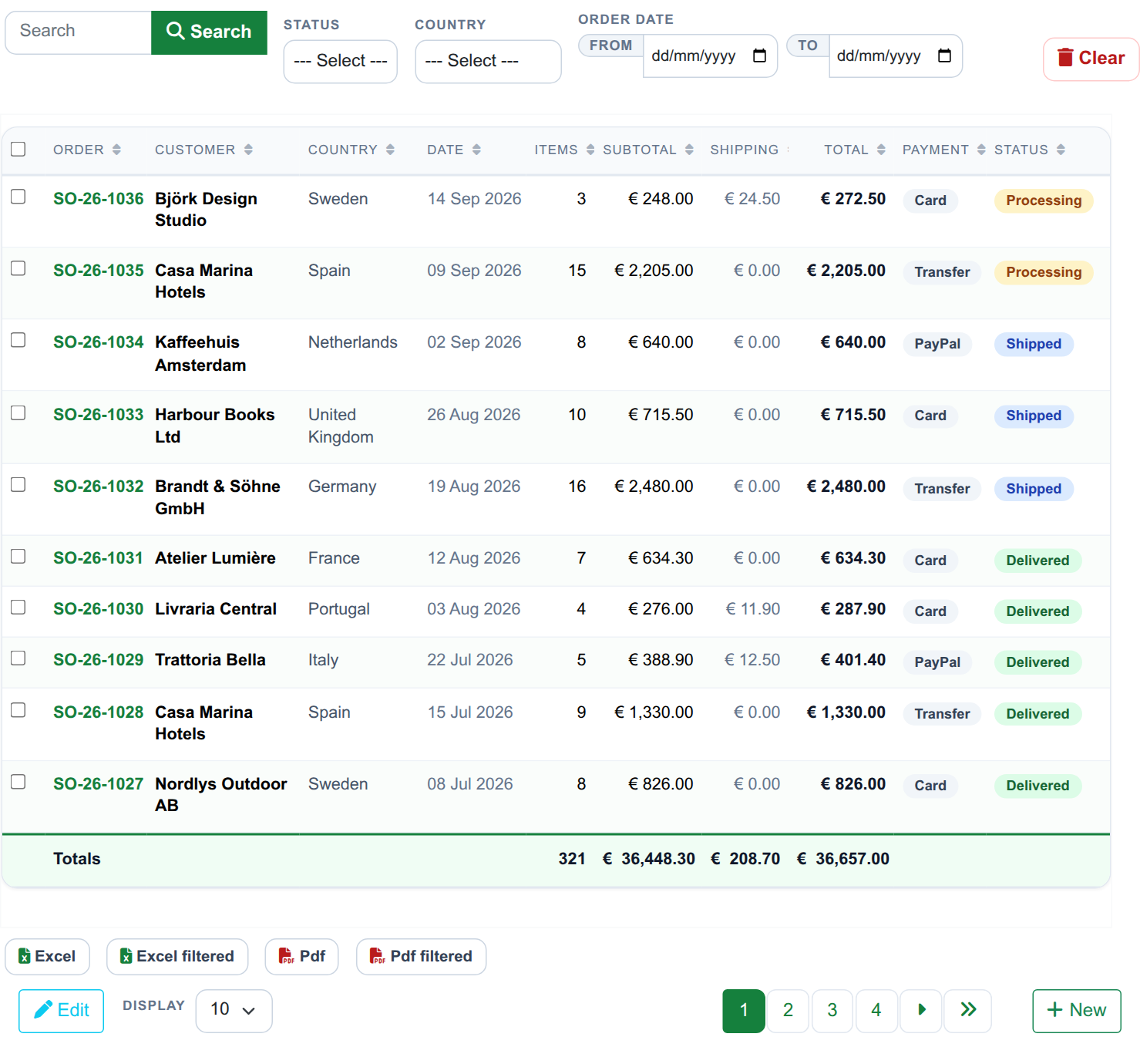
The whole list on the frontend: filters with the date range, the table with status pills and the totals row, export buttons and pagination.
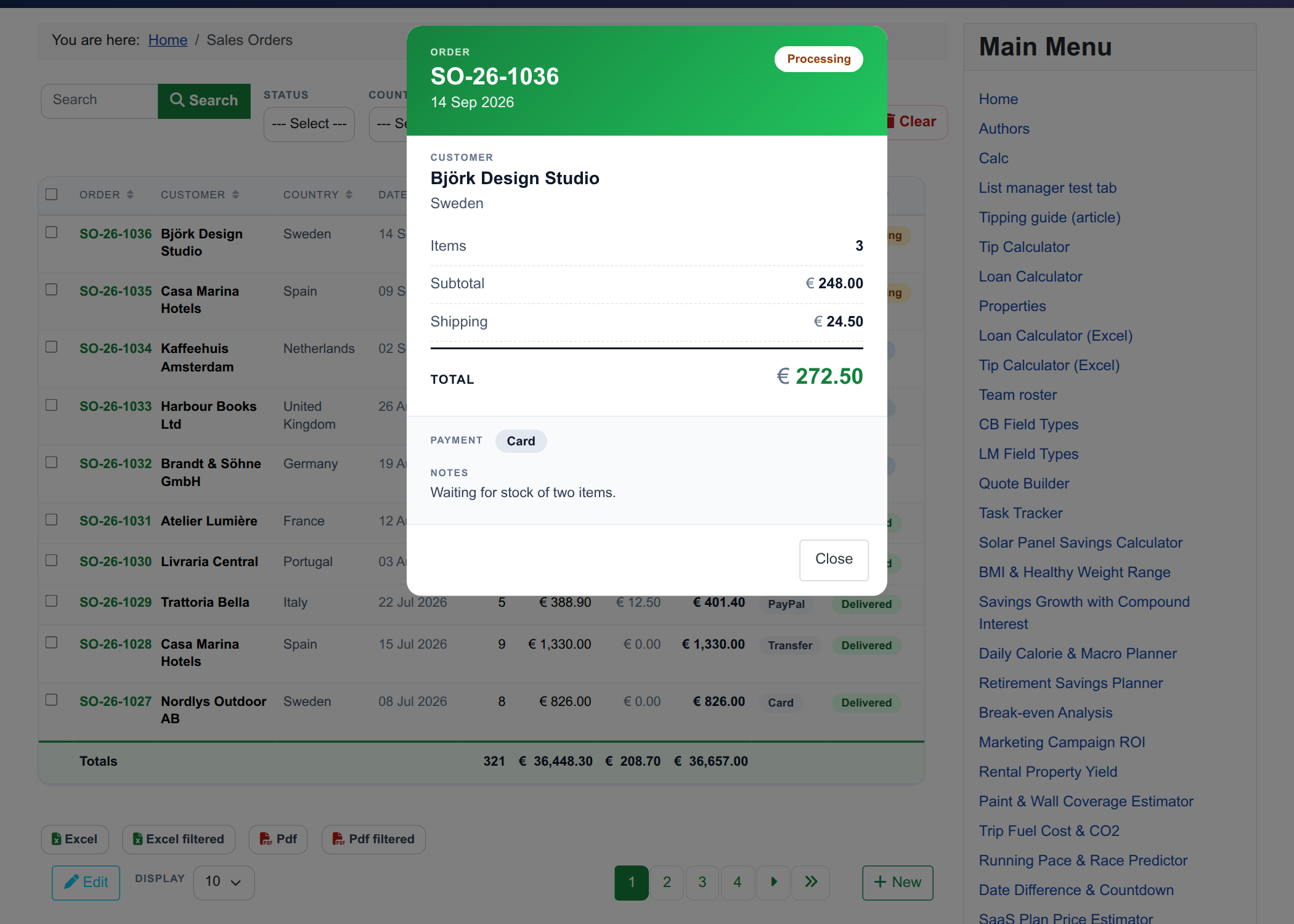
The order-summary pop-up that opens when a row is clicked.
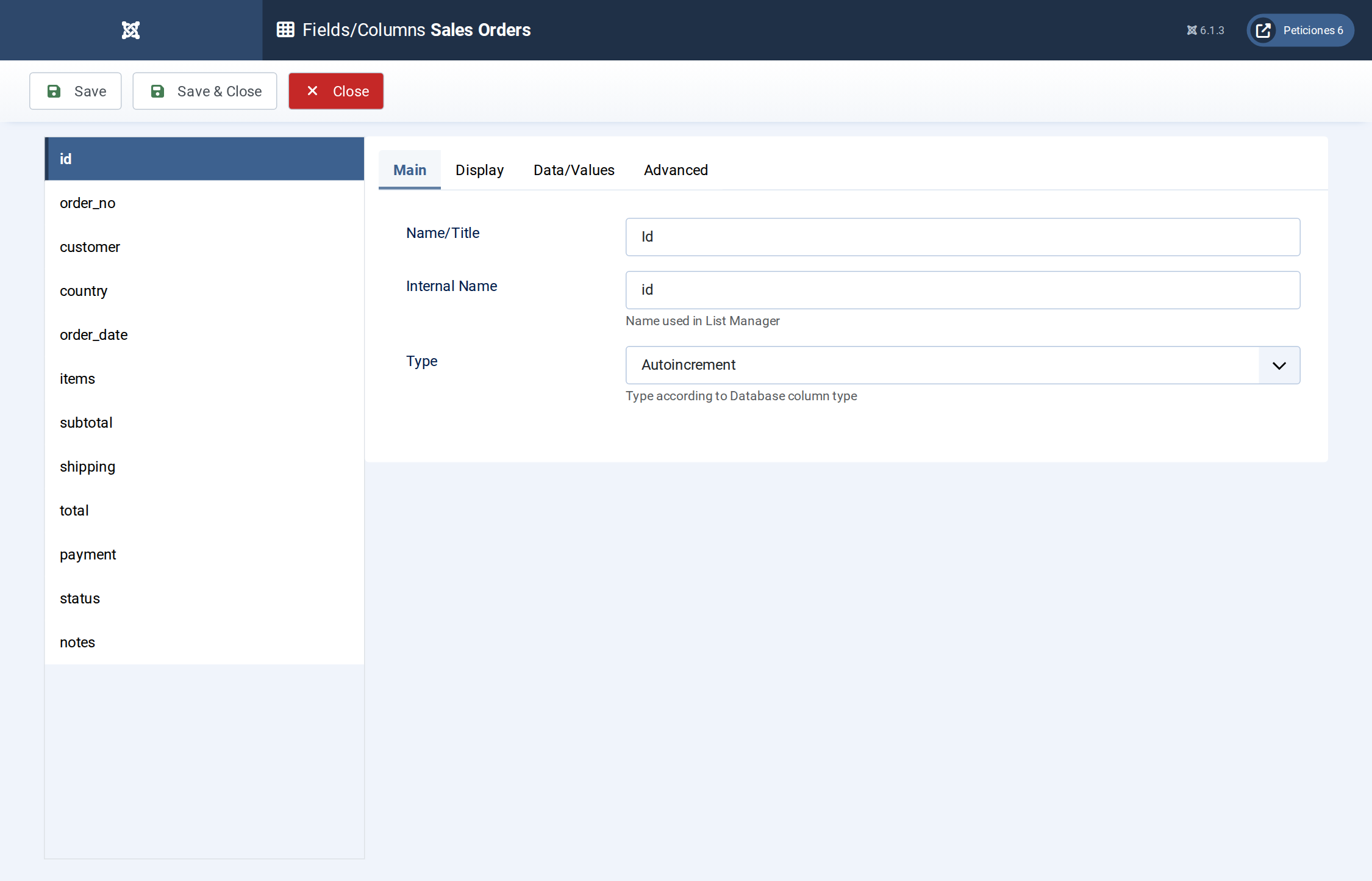
Fields/Columns: the twelve columns with their types; the money columns use two decimals and a Sum total.
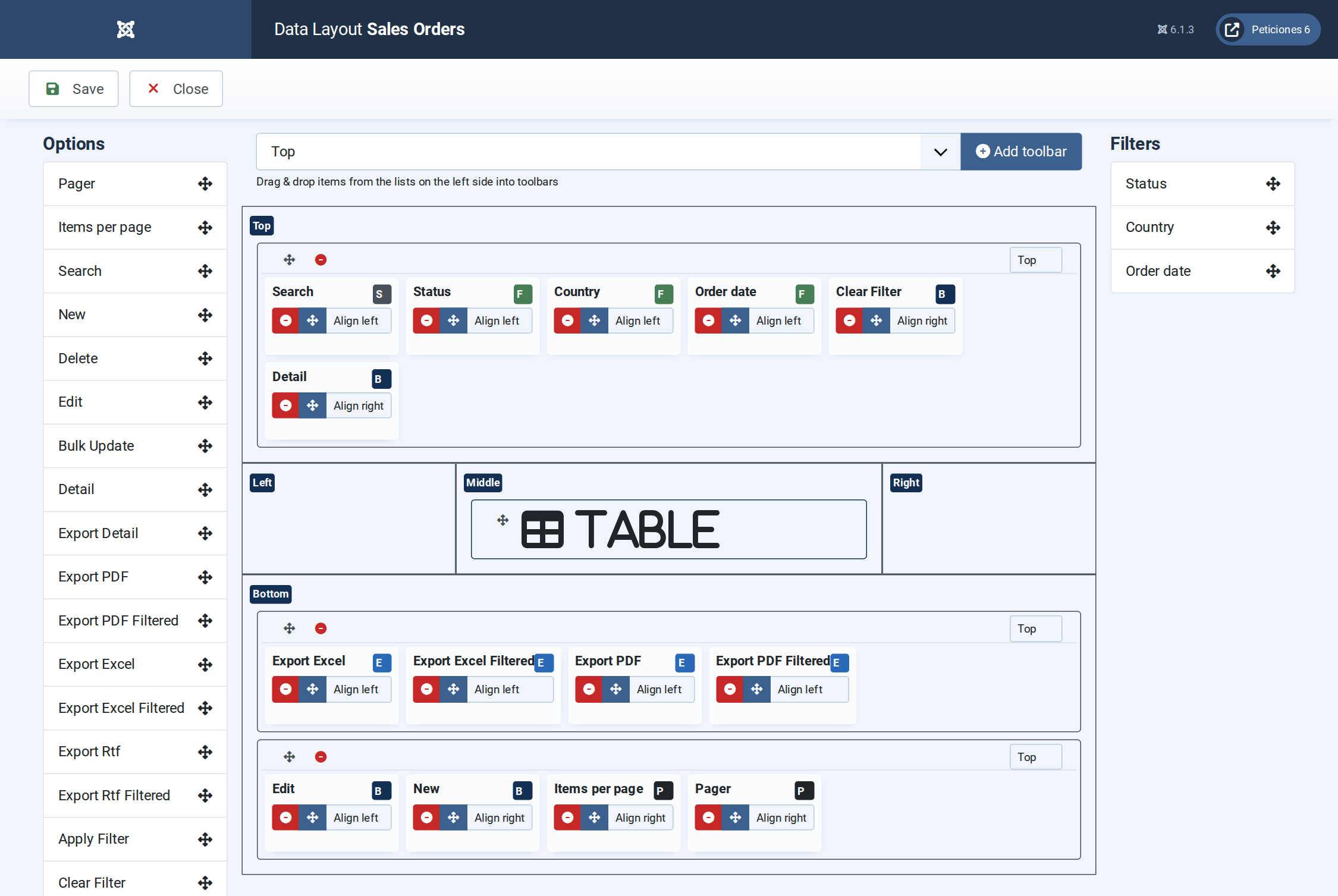
Display › Data Layout: toolbar rows with the filters (including the date range) and the export buttons.
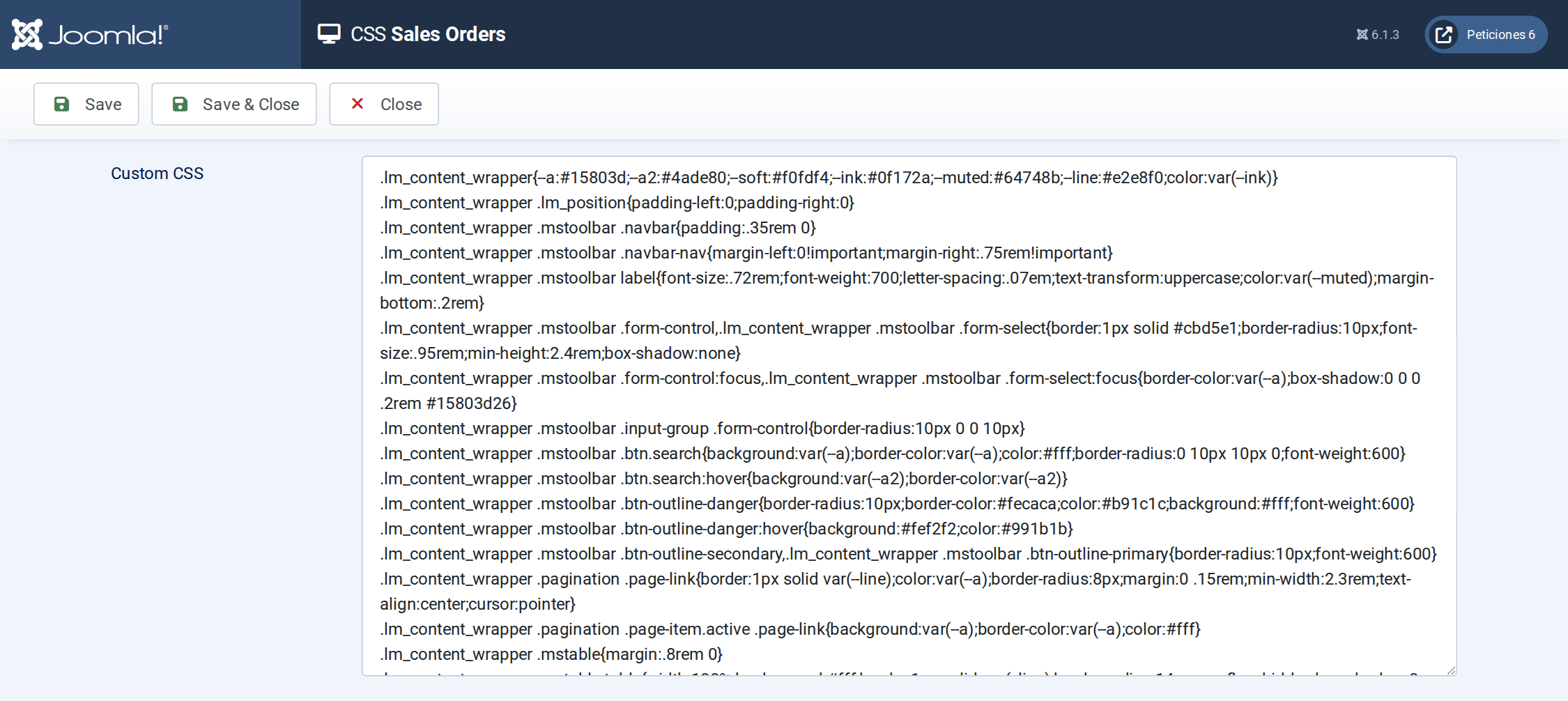
The CSS screen: column widths, the totals row, the phone card layout, the order summary and the form.
Want this exact example on your own site?
- Create the table. Run the SQL file in phpMyAdmin (or the mysql client) on your Joomla database. It creates the sample table with its data (the table name has no Joomla prefix and is replaced if it already exists).
- Import the configuration. In your Joomla admin open Components › List Manager › Import and upload the configuration file — it is the same file the component's own Export Configuration button produces.
- Publish it. Create a menu item of type List Manager and select the imported list.